By Neil Griffiths Bsc (Hons).,MChemA.,CChem.,CSci.,FRSC.,FIFST.,FSOFHT
Director for Neil Griffiths Publications Ltd
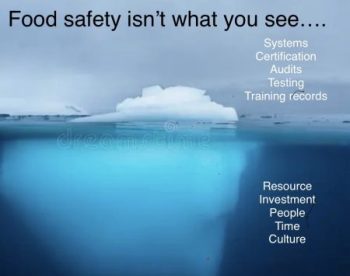
A few years ago, I gave a presentation on Food Safety and Legality – Current and Future Trends. Like many others, it centred on systems, monitoring, and control processes.
In fact, most seminars and training sessions still do exactly the same.
But one critical factor is rarely debated:
Resource and investment.
It is important to be clear — systems and procedures are essential. They provide structure, consistency, and a framework for control.
But they do not, in themselves, create food safety.
They are mechanisms for managing how resource is applied.
And in an increasingly complex food industry — with global supply chains, tighter margins, and rising expectations — the level and type of resource available has become just as important as the systems used to control it.
This resource is no longer just people.
It includes investment in:
• Skilled professionals
• Training and competence development
• Technology and IT systems
• Data, monitoring, and analytics capability
Systems and procedures can improve efficiency and help target risk.
But they cannot compensate indefinitely for constrained or reducing investment.
We are very good at designing systems and procedures to use resource efficiently.
The real question is whether we are investing enough resource to begin with.
I remember the introduction of the Food Safety Act 1990 and, in particular, the concept of due diligence.
The question from directors was always the same:
“How much resource will this require?”
Because compliance has never just been about having systems and procedures in place — it’s about whether sufficient resource exists to make them effective in practice.
The debate, therefore, should not be limited to how we refine systems and procedures.
It should also address whether sufficient investment is being made in the people, technology, and capability required to support them.
Because ultimately:
Systems optimise performance — but investment determines capability.:
When things go wrong —is it usually a failure of systems and procedures…
or a lack of investment behind them?
I’d be interested in views from others working in or around the industry.
Other relevant publications and articles can be viewed on this website just click on the menu.

