By Neil Griffiths Bsc (Hons).,MChemA.,CChem.,CSci.,FRSC.,FIFST.,FSOFHT
Director for Neil Griffiths Advisory Ltd
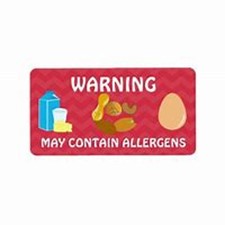
No, you have not misread the title of this Article. I am aware that many legislators, consumer organisations and food professionals are currently arguing the reverse. Many believe that some in the food industry are undertaking precautionary allergen labelling (alibi labelling, may contain and the like) unnecessarily without first properly considering the risks and the systems that could be put in place to control such risks. As a result, allergen sufferers are presented with potentially unnecessary precautionary labelling that restricts choice they say.
The need or otherwise for precautionary allergen statements is covered both in previous and current Food Standards Agency (FSA) Guidance. This guidance (recently updated) demonstrates the apparent concern that too much precautionary allergen statements or information could be being given. The guidance therefore suggests this should only be provided “if an unavoidable risk of allergen cross contamination has been identified following a risk assessment that cannot be sufficiently controlled through controls, such as segregation and cleaning. Its use is not a substitute for good food hygiene and safety practices, and it could be considered misleading food information if it does not convey a real risk to the consumer”.
My concern is the apparent lack of debate that the reverse may be true. I am concerned that the potentially unavoidable risks involved of cross contamination by allergens in the non-prepacked, prepacked for direct sale and catering sectors may not be properly understood. This concern is not a reflection on the owners, managers or employees in this sector but surrounds the premises they operate from and the professional support they can afford or have available to control the risks of cross contamination.
The need in food legislation to recognise the ‘precautionary principal approach’ (i.e., if in doubt take the safe approach) may not be being considered properly by those who are issuing and agreeing the above guidance. There is very little empirical evidence, that I am aware of, to support the assumption that there is a significant amount of precautionary labelling/communication being undertaken without a proper risk assessment to support it. Further there appears to be very little empirical evidence that the reverse is true other than what I believe are the obvious difficulties the non-prepacked, prepacked for direct sale and catering sectors have in being able to control and eliminate the risks to avoid cross contamination by allergens.
It is apparent that the risks of getting any form of allergen labelling wrong can carry considerable penalty both criminally, civilly and reputationally. The need for the food industry to show that they have acted ‘diligently’ and have significantly reduced the risk of incorrect allergen labelling or the lack of it is high.
Many point to the fact that all in the food industry should already be adopting good hygiene practices which, if adopted should go a long way to reducing the risk of cross contamination by allergens through good cleaning and the like. However, reducing the risk of allergen cross contamination does not benefit from the use of disinfectants and sanitisers, ph control, low water activity, cooking (unless the allergen protein is substantially degraded), temperature control, preservatives or shelf-life control. As such the avoidance of allergen cross contamination carries, in my view, greater challenges to reduce risks to acceptable levels.
Scientists regularly test for the presence of allergens in food products or their ingredients either as part of food companies’ due diligence (helping to refine and improve allergen control systems) or to assess compliance with food labelling. The interpretation of such results, which can involve levels of allergens being found in the parts per million, can and does prove difficult for those within food companies or enforcement tasked with deciding the appropriate actions to be taken in the light of such results. At these low levels it becomes impossible to determine from the test result alone whether the allergen concerned has been added deliberately or is a result of a cross contamination incident. Careful examination of the traceability and specifications of the product and ingredients used is normally required to resolve such issues.
There is also a difference both criminally and civilly between those who have inadvertently added an unlabelled allergen and those who have deliberately mis-labelled for commercial advantage (fraud) particularly when claims are involved such as ‘allergen free’ or “suitable for vegans”. I have also always believed that claiming inadvertent addition of allergens either through cross contamination or their inclusion in ingredients (without prior knowledge) could only be used as a defence if ‘due diligence’ has been demonstrated by the food company concerned. This would involve having proper systems which ensure, as much as reasonable possible, that all has been done to avoid cross contamination and to gain full knowledge of the ingredients used and their contents.
However as those concerned with such considerations happily discuss, interpret and react to tests showing the unexpected presence of allergens I have concerns that some if not many do not fully understand the practical implications involved in trying to avoid the presence of undeclared allergens at levels that can be ‘injurious to health’ to some or all in an allergic population.
To illustrate my concerns, I would like you to consider this example:
Put 93.6 Kg of flour (Any will do other than peanut flour. You’ll have a little left over from 94 one Kg bags) into a container (you will need a big one). Take a small number of peanuts and crush them into a powder. Take a pinch of the peanut powder (0.36g according to Google) and add it to your 93.6Kg of flour. Attempt to mix. You have just produced flour which contains 1 part per million (mg/kg) of peanut protein (assuming 26% protein in the peanut powder). Now consider a freshly prepared Scone weighing typically 100g. To contaminate the Scone with 1 part per million of peanut protein you would only need 0.38mg of peanut powder or 0.00038g. This is obviously much lower an amount than a pinch (roughly 1000 times less) and much more difficult to visualise (or see!). At these low levels it is not difficult to understand why peanut dust in the air and environment can lead to the potential to cause reaction to those who suffer severe peanut allergy. It also explains why many individuals have experienced a request not to eat nuts on a flight because of the possibility of the aircrafts air system spreading nut dust to a particular nut sensitive passenger. Imagine this level of risk in the air and environment in your food premise.
In evaluating risk, it is obviously important to consider the level of an allergen that is likely to elicit a reaction in the allergic population if consumed. Scientists have and are currently evaluating these eliciting doses and good progress is being made. Eliciting doses which produce reactions in 1% and 5% of an allergic population are given (ED01 and ED05) for a wide range of allergens but typically these are at the milligram level or below of allergen protein for the majority of allergens. This means that allergen levels which are likely to produce an allergic response in a significant number of the allergic population only needs to be in the low parts per million in the final food (hence the physical example above is helpful in understanding these levels). As scientists evaluate these levels for the purpose of establishing reference doses or legal thresholds for allergens it is important to recognise the difficulties in establishing such values.
It is estimated that there are over 17 million people who suffer from peanut allergy in Europe. If only 1% of this allergic population produce an allergic reaction when exposed to a low level of peanut protein than that is still over 170,000 people. This begs the question on how low these levels must be to avoid selling food to allergic consumers which are ‘injurious to health’? Even if it can be claimed or proved that the allergic reactions at these low eliciting dose levels are all mild (unlikely knowing the wide range of sensitivities of any allergic population) doesn’t any reaction that produces ‘harm’ to an individual become injurious to health and therefore in contradiction to primary European and UK regulation. This is a difficult consideration for those tasked with attempting to set reference doses or statutory thresholds for a wide variety of allergens.
Whilst food professionals, scientists and the like debate and communicate the impact of these very low levels of allergens the physical example given above attempts to illustrate what these levels mean in a practical sense. Small amounts of an allergen that you can’t even see left on a surface or in a cooking utensil can contaminate a product to a level that can cause an allergic reaction in an allergic individual. Environmental contamination from allergen particles in the air settling on open product can have a similar effect. When considering the stringent requirements required to ensure thorough cleaning, proper segregation of allergens and the necessary environmental controls the potential for cross contamination is high and, as demonstrated in the prepacked food area, requires comprehensive and refined systems of control to avoid.
Further cross contamination very rarely results in an even level of contamination across the whole product. Consider my example of the small amount of peanut powder in the flour. Without a considerable amount of mixing of the 93.6 Kg of flour it is highly unlikely that the small amount of peanut powder will find itself evenly distributed throughout the flour. As such as the flour is sampled a higher concentration of peanut protein may be found in one sample and none in another. This is a common problem found in sampling food products for analysis when cross contamination is expected with a single negative result from a batch of product not necessarily confirming cross contamination is not present in that batch or across the whole production.
So, are the risks involved of cross contamination by allergens across the food industry (but in particular the non-prepacked, prepacked for direct sale and catering sectors) fully understood? Do all chefs in busy restaurants understand how clean their cooking utensils need to be to avoid allergen cross contamination on every use? Do all food sectors operate out of premises that facilitate control of potential environmental contamination (air borne particles and the like). Do all food sectors operate out of premises that allow proper segregation of ingredients and products to avoid cross contamination? Further do all food sectors contain or are they able to afford to source the technical competence to ongoingly establish, control and validate (through expensive scientific tests?) the systems necessary to avoid cross contamination? Obviously if the answer to these questions is no than precautionary labelling/communication is necessary.
In conclusion I do believe more precautionary labelling may be necessary in some sectors of the food industry. I believe that problems of reducing choice for allergen sufferers need to be balanced against the risks involved in being supplied with an unlabelled or an uncommunicated allergen contaminated product. Any guidance needs to recognise these risks (real risks?) after all the need not to restrict choice is highly unlikely to be considered as any defence when faced with an allergen incident involving harm.
Am I overemphasizing the risks of cross contamination by allergens in certain sectors of the food industry? I will leave you to decide and debate. However, I would point to the current apparent downsides of getting it wrong!
 Neil Griffiths Publications Limited